Less Busywork. More Room for What You Do Best.

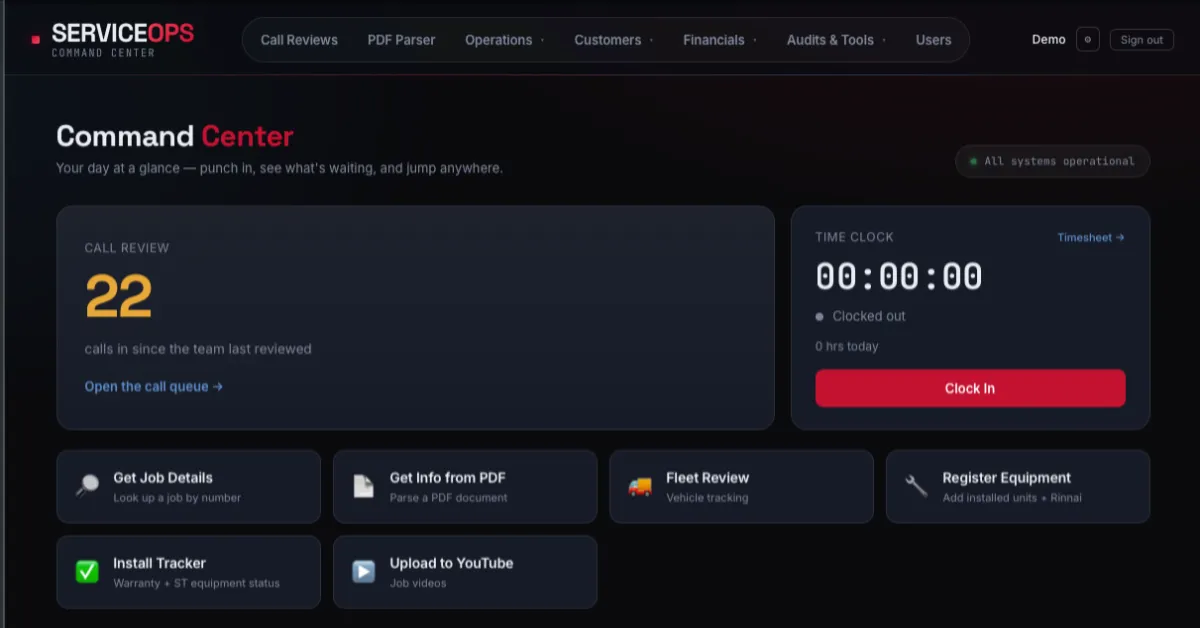
ServiceOps Command Center
Less Retyping. More Time to Get Things Done.
A custom operations system built to help a plumbing and HVAC team connect information, simplify repetitive work, and see what needed attention.
Company: Ehret Plumbing Heating & Cooling Belleville, IL
My Role: Designed and built while working at Ehret
Connected Platforms: Servicetitan and LeadConnector
Good Software. Too Much Work Between Systems
Ehret already had software to manage its business. But everyday tasks still required people to search for information, enter the same details more than once, and manually check what needed to happen next.
Customer calls needed review. Equipment information needed to reach manufacturer registration systems. Completed jobs needed attention before they could be billed.
The opportunity was to make better use of the tools and information the company already had.
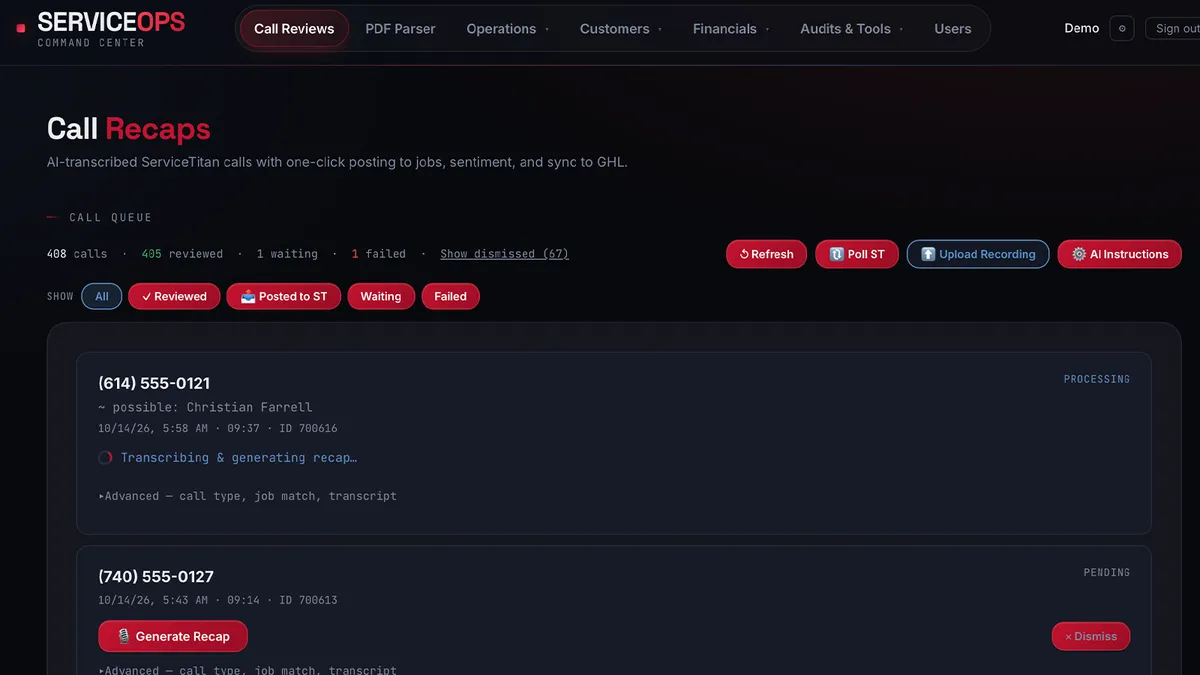
Turn Calls Into Useful Information
Listening through customer calls takes time. Remembering every detail takes even more.
The call review system transcribed and organized calls, summarized key points, and matched them to customer and job records. Staff could review the information, make corrections, and post useful notes back to ServiceTitan.
When a customer called again, the office had context without starting the conversation over.
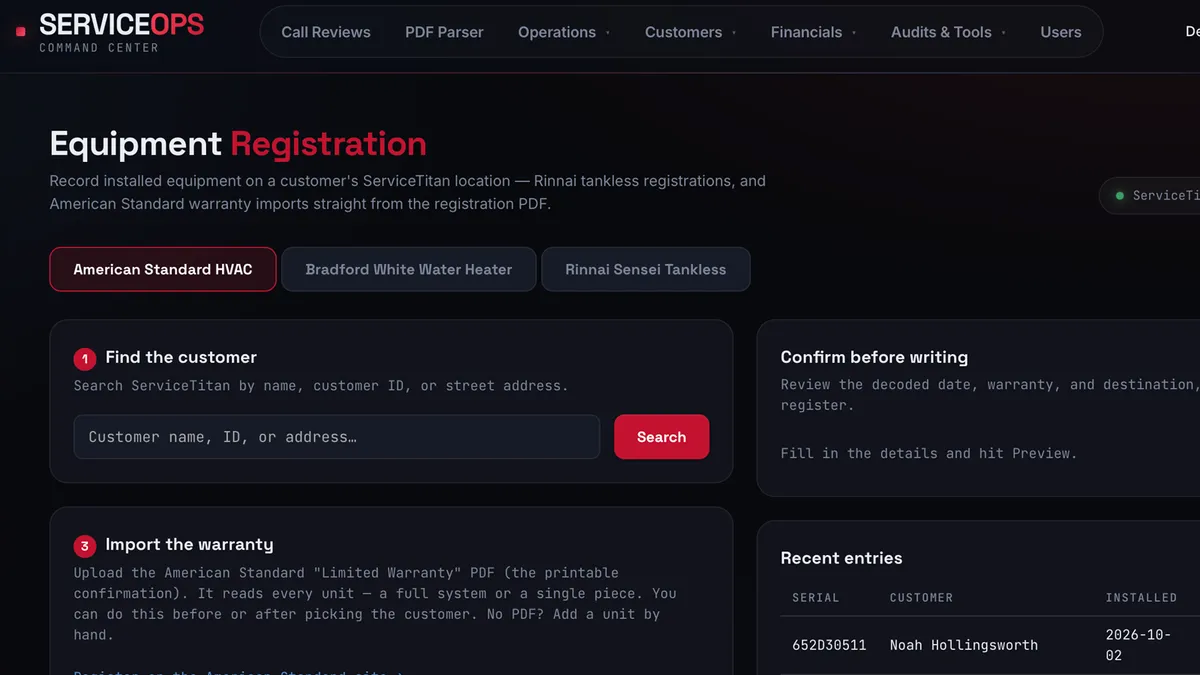
Enter Equipment Details With Less Repetition
Equipment registration often meant taking information from one system and typing it into another.
I built tools to extract equipment details from documents and photos, check serial information, and prepare manufacturer-specific registration data.
The goal was straightforward: reduce repeated entry and make the information easier to check.
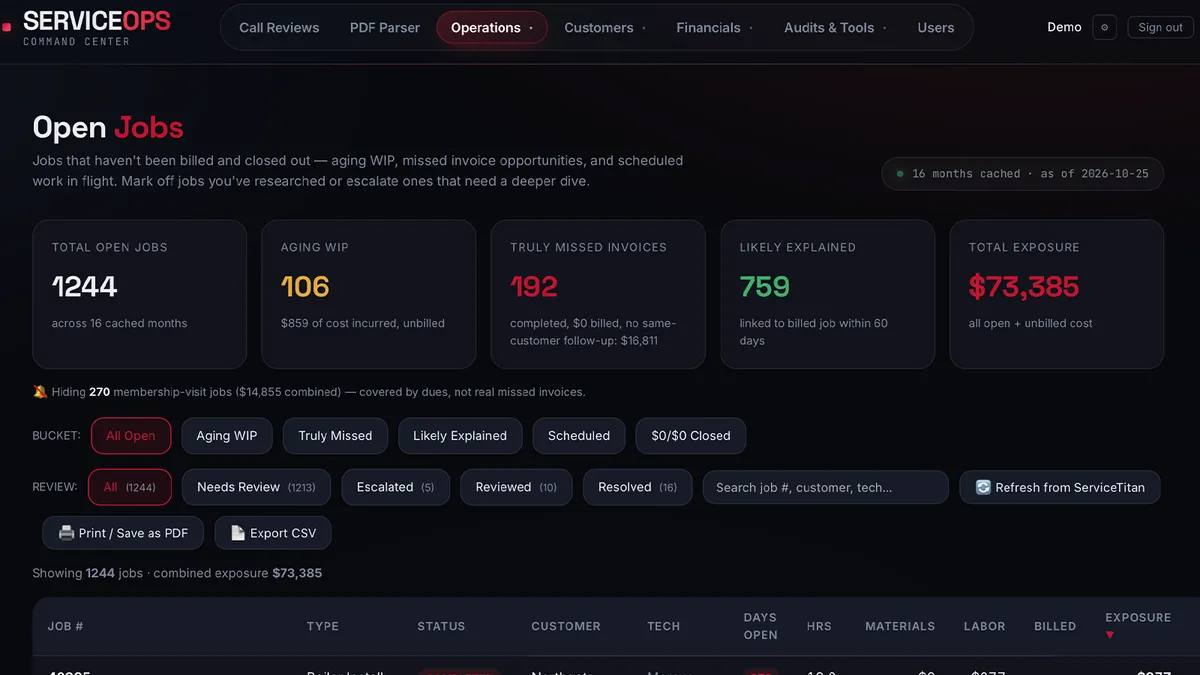
Make Unfinished Work Easier to See.
Information is only useful when it helps someone take the next step.
Command Center brought attention to jobs needing follow-up and gave the office a clearer view of operational information. Other tools supported reporting, supplier invoice review, fleet information, and customer record synchronization.
Some features became part of daily work. Others were built and piloted without reaching full-team adoption.
Built To Be Checked and Trusted
A useful AI system needs more than a confident answer.
I combined AI with defined rules, validation, and staff review. As the team used the system, I refined it to reduce misleading alerts, prevent duplicate records, and make missing information clear.
The aim was to give people information they could check and act on with confidence.
What Changed
Lower recurring automation costs
The replacement automation setup ran for under $25 per month, compared with roughly $700 per month for the previous stack. These figures describe recurring operating costs, excluding development labor and ongoing maintenance.
A faster way to review calls
Instead of listening through 15–20 calls a day, staff could review organized transcripts and summaries.
Better context for customer conversations
Reviewed call notes could be attached to the relevant job, helping staff understand earlier conversations.
Daily use where it helped most
By July 2026, call review and fleet reporting were in daily use. Other modules remained at the pilot stage.
These results reflect this implementation, rather than a promised outcome for every business.
Where Is Repetitive Work Slowing You Down?
You may already have the tools you need. The missing piece could be a better connection between them—or a simpler way for your team to use the information.
We’ll start with one task that takes too much time and explore a practical way to improve it.
Less catching up after hours. More room for the work you enjoy and the people you want to get home to.